
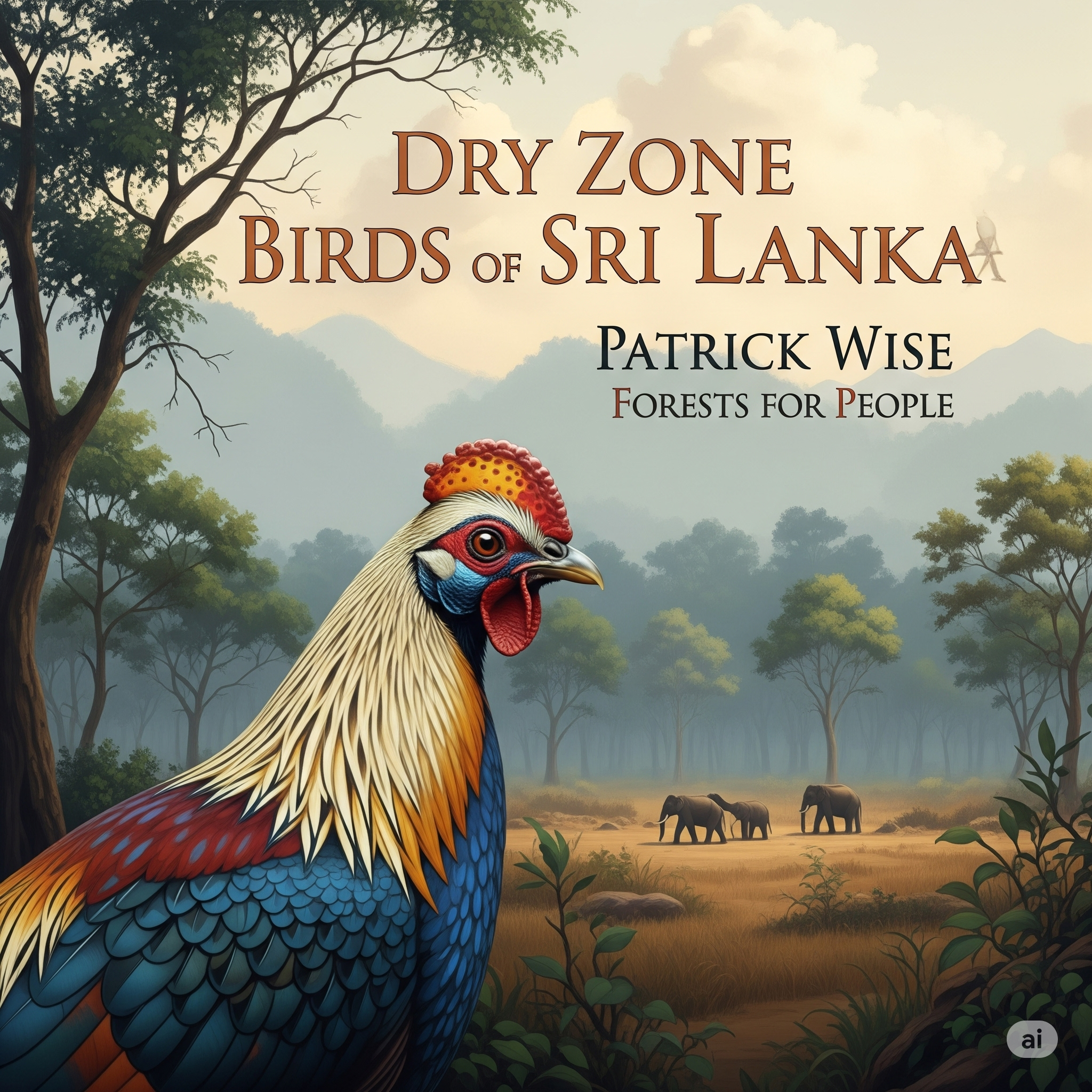
Cover of Birds of the Forests
If you can't identify this bird, it's ok, it's AI-created.

Cover of Birds of the Forests

Beyond the Horizon: Nidikumba's Forest Sanctuary

Dry Zone Birds of Sri Lanka

A Journey Through Nature’s Winged Wonders
while you stay at Forests for People Nidikumba, Sri Lanka

This reference guide

Discover Sri Lanka's Dry Zone Birds at Nidikumba! Calling all birdwatchers! Your passport to Sri Lanka's vibrant Dry Zone awaits. Explore the "Dry Zone Birds of Sri Lanka" and immerse yourself in the unique world of upto 270 distinct (Dry Zone Bird) species, observing their fascinating behaviors in their natural habitat.

Nidikumba.com is your ideal base for this avian adventure. Visit our website to explore our serene accommodations and discover why we're the perfect spot for your birding escape.

Share Your Discoveries

After an unforgettable experience, share your best bird sightings and memories! Post your photos and stories on social media using #NidikumbaBirds. Help us inspire more birdwatchers to explore our beautiful haven!

Ready to add these magnificent birds to your life list? Your ultimate birding expedition begins at Nidikumba. Unlock the secrets of this incredible avian paradise!

Book Your Avian Adventure with us and unlock the secrets of this incredible avian paradise!

⬆ Top
The Wiki Birder Guide

ENDEMIC BIRDS (Found Only in Sri Lanka)

Sri Lanka Junglefowl (Gallus lafayettii) – National bird, common in scrublands.
Sri Lanka Wood Pigeon (Columba torringtoniae) – Vulnerable, moist forests near the dry zone.
Crimson-fronted Barbet (Psilopogon rubricapillus) – Small, fruit-loving, loud call.
Brown-capped Babbler (Pellorneum fuscocapillus) – Skulker in dense undergrowth.
Sri Lanka Grey Hornbill (Ocyceros gingalensis) – Noisy flocks in fruiting trees.
Sri Lanka Hanging Parrot (Loriculus beryllinus) – Common in all zones, including dry zone.
Layard's Parakeet (Psittacula calthrapae) – Found in wet zone and riparian forests of dry zone.
Red-faced Malkoha (Phaenicophaeus pyrrhocephalus) – Inhabits undisturbed forest areas, including dry zone riparian forests.
Sri Lanka Spurfowl (Galloperdix bicalcarata) – Common in humid forests across all zones.
Sri Lanka Scimitar-babbler (Pomatorhinus melanurus) – Common in forest understory across all zones.

RESIDENT BIRDS (Common in Dry Zone)

Crested Serpent Eagle (Spilornis cheela) – Often perched near waterholes.
White-bellied Sea Eagle (Haliaeetus leucogaster) – Found along rivers and coasts.
Indian Peafowl (Pavo cristatus) – Abundant in open areas.
Painted Stork (Mycteria leucocephala) – Inhabits seasonal wetlands.
Indian Roller (Coracias benghalensis) – Electric blue, often seen on telegraph wires.
Jerdon’s Nightjar (Caprimulgus atripennis) – Nocturnal, camouflaged on gravel.
Yellow-wattled Lapwing (Vanellus malabaricus) – Found in dry scrub, known for loud alarms.
Sirkeer Malkoha (Taccocua leschenaultii) – Slinky, snake-like movements in dense vegetation.
Lesser Whistling-duck (Dendrocygna javanica) – Common resident in wetlands.
Cotton Pygmy-goose (Nettapus coromandelianus) – Resident in freshwater wetlands.

MIGRATORY BIRDS (Seasonal Visitors)

Indian Pitta (Pitta brachyura) – Arrives Oct–Mar, found near rainforest edges.
Forest Wagtail (Dendronanthus indicus) – Winter migrant, often near water bodies.
Blue-tailed Bee-eater (Merops philippinus) – Seen in large flocks pre-monsoon.
Booted Eagle (Hieraaetus pennatus) – A rare winter visitor.
Greater Flamingo (Phoenicopterus roseus) – Migrates to coastal lagoons and salterns.
Garganey (Anas querquedula) – Most abundant migratory duck in wetlands.
Western Reef Egret (Egretta gularis) – Regular winter migrant to coastal areas.
Pacific Golden Plover (Pluvialis fulva) – Common winter visitor to dry zone grasslands and mudflats.
Northern Shoveler (Spatula clypeata) – Migratory duck found in wetlands.
Osprey (Pandion haliaetus) – Migrant raptor, often seen near large water bodies.

WETLAND & RIVERINE BIRDS

Black-crowned Night Heron (Nycticorax nycticorax) – Found along Kirindi Oya riverbanks.
Stork-billed Kingfisher (Pelargopsis capensis) – Large, fish-loving kingfisher.
Pheasant-tailed Jacana (Hydrophasianus chirurgus) – Known for walking on lily pads.
Little Grebe (Tachybaptus ruficollis) – Common in small ponds and tanks.
Indian Shag (Phalacrocorax fuscicollis) – Common cormorant species in wetlands.
Indian Darter (Anhinga melanogaster) – Often seen drying its wings near water.
Little Egret (Egretta garzetta) – Very common white egret in various wetlands.
Intermediate Egret (Ardea intermedia) – Common medium-sized egret.
Grey Heron (Ardea cinerea) – Large wading bird, often solitary.
Asian Openbill (Anastomus oscitans) – Distinctive bill, common in paddy fields.

THREATENED & RARE BIRDS

Lesser Adjutant (Leptoptilos javanicus) – Endangered, found in wetlands near Yala.
Spot-billed Pelican (Pelecanus philippensis) – Near-threatened, forms large colonies.
Sri Lanka Frogmouth (Batrachostomus moniliger) – Rare, nocturnal bird.
Marbled Teal (Marmaronetta angustirostris) – Globally vulnerable, rare migrant to wetlands.
Common Pochard (Aythya ferina) – Vulnerable, rare winter visitor to wetlands.
Ferruginous Duck (Aythya nyroca) – Near-threatened, uncommon winter visitor.
Pale-capped Pigeon (Columba punicea) – Vulnerable, rare and localized.
Serendib Scops Owl (Otus thilohoffmanni) – Recently discovered, rare and elusive.
Black-necked Stork (Ephippiorhynchus asiaticus) – Rare resident, found in dry zone wetlands.
Great Black-headed Gull (Ichthyaetus ichthyaetus) – Rare migrant to coastal dry zone areas.


Habitat-Based Quick Guide:
Dry Zone Birds of Sri Lanka

SCRUBLANDS BIRDS

Sri Lanka Junglefowl (Gallus lafayettii) – National bird, very common in dry zone scrublands and forests.
Yellow-wattled Lapwing (Vanellus malabaricus) – Common in dry scrub and open areas, known for loud alarm calls.
Jerdon’s Nightjar (Caprimulgus atripennis) – Nocturnal, well-camouflaged on gravel and open scrubland.
Indian Roller (Coracias benghalensis) – Vibrant blue bird, often perches on wires and low trees in open scrub.
Indian Peafowl (Pavo cristatus) – Abundant in open scrublands and forest edges.
White-browed Bulbul (Pycnonotus luteolus) – Widespread in scrub and garden habitats of the dry zone.
Red-vented Bulbul (Pycnonotus cafer) – Very common in scrub, gardens, and urban areas.
Common Babbler (Turdoides caudata) – Often seen in noisy flocks foraging in dry scrub.
Pied Cuckoo (Clamator jacobinus) – Often found in thorny scrub and open woodlands.
Plain Prinia (Prinia inornata) – Small warbler common in tall grass and scrub.

RIVERS & WETLANDS BIRDS

Stork-billed Kingfisher (Pelargopsis capensis) – Large, fish-eating kingfisher found near rivers and large water bodies.
Painted Stork (Mycteria leucocephala) – Common in seasonal wetlands, often seen wading.
Pheasant-tailed Jacana (Hydrophasianus chirurgus) – Graceful bird that walks on lily pads in freshwater wetlands.
Black-crowned Night Heron (Nycticorax nycticorax) – Nocturnal heron, often found along riverbanks like Kirindi Oya.
White-bellied Sea Eagle (Haliaeetus leucogaster) – Large raptor, patrols rivers, coasts, and large reservoirs.
Lesser Adjutant (Leptoptilos javanicus) – Endangered stork, found in larger wetlands, notably near Yala.
Spot-billed Pelican (Pelecanus philippensis) – Near-threatened, forms large colonies on wetlands and reservoirs.
Little Cormorant (Microcarbo niger) – Very common in almost all water bodies.
Indian Pond Heron (Ardeola grayii) – Common and well-camouflaged in shallow wetlands.
Common Kingfisher (Alcedo atthis) – Small, vibrant kingfisher found by clear waters.

FORESTS BIRDS

Sri Lanka Grey Hornbill (Ocyceros gingalensis) – Noisy flocks in fruiting trees within dry zone forests.
Brown-capped Babbler (Pellorneum fuscocapillus) – Secretive bird, skulks in dense undergrowth of forests.
Indian Pitta (Pitta brachyura) – Migratory visitor (Oct–Mar), found in forest edges and dense cover.
Crimson-fronted Barbet (Psilopogon rubricapillus) – Small, fruit-loving bird with a loud call, common in forested areas.
Sirkeer Malkoha (Taccocua leschenaultii) – Known for its slinky, snake-like movements through forest foliage.
Red-faced Malkoha (Phaenicophaeus pyrrhocephalus) – Endemic, found in undisturbed dry zone riparian forests and dense cover.
Crested Serpent Eagle (Spilornis cheela) – Common raptor in forested areas, often perched on trees.
Black-hooded Oriole (Oriolus xanthornus) – Brightly colored bird with melodious calls, common in dry zone forests and woodlands.
Common Myna (Acridotheres tristis) – Adaptable bird, found in forest edges and open areas near human habitation.
Sri Lanka Wood Pigeon (Columba torringtoniae) – Vulnerable endemic, found in moist forests near the dry zone.


Top 10 Essentials for Bird Watching
Prioritized List for a Safe and Successful Birding Trip

1. Binoculars (8x42 or 10x42 recommended)

Your primary tool for spotting and identifying birds at a distance. Essential for a productive birdwatching trip.

2. Field Guide to Sri Lankan Birds

Use a local guidebook (like Warakagoda’s) to identify species, calls, and habitats accurately.

3. Insect Repellent (DEET or natural alternatives)

Crucial for avoiding bites from mosquitoes and ticks, especially near water bodies and dense vegetation.

4. Sun Protection (Hat, Sunglasses, Sunscreen)

The dry zone can be extremely sunny. Use SPF 30+ sunscreen and a wide-brim hat to stay protected.

5. Lightweight, Neutral-Colored Clothing

Wear breathable, long-sleeved clothes to stay cool, avoid sunburn, and blend into the surroundings.

6. Notebook & Pen / Birding App

Record your sightings, behaviors, and sounds. Apps like eBird are useful for tracking and sharing your data.

7. Water (Minimum 2 Liters)

Dehydration is a serious risk in Sri Lanka's dry zone. Always carry enough clean drinking water.

8. Camera with Zoom Lens

Capture photos of rare birds. A lens of at least 300mm is ideal in open dry environments.

9. Field Snacks (Trail Mix, Fruit)

Quiet, energy-rich foods help you stay alert during long birding sessions without disrupting nature.

10. Local Map / GPS / Guide

Stay safe and find the best trails or waterholes with navigation tools or help from a local birding guide.

with us and unlock the secrets of this incredible avian paradise!

Have a fantastic time out there—may your binoculars find all the rare gems today!
Sri Lanka’s dry zone holds wonders most eyes never see. Here's to you being one of the lucky ones.
Safe travels and happy spotting!

⬆ Top